

Software organizations are actively overhauling how they support the open source projects underpinning modern tech infrastructure. Critical libraries and packages often rely on small teams with minimal funding and no corporate backing, exposing the software supply chain to severe sustainability and security risks. To address this, companies are stepping up with engineering hours, financial sponsorships, and structured operational support to strengthen foundational codebases for long-term global reliability.
The tech industry increasingly recognizes that relying indefinitely on unpaid volunteer labor is a systemic vulnerability. Maintainer burnout and high-profile security incidents prove that critical code bases require dedicated resources. Modern enterprises depend heavily on these building blocks, elevating the health of open-source ecosystems to a boardroom priority rather than a purely technical issue.
Key Takeaways: What the Evidence Shows
New foundations, grants, and structured funding programs are actively redistributing resources to maintainers and contributors. Industry leaders and independent reporting including coverage from sources like Wired confirm that long-term investment in maintenance yields measurable results across multiple areas:
-
Faster Vulnerability Patching: Data from developer platforms shows that projects with structured financial support or dedicated engineering hours patch vulnerabilities significantly faster than unmaintained repositories.
-
Higher Code Quality & Predictability: Documentation quality and release consistency improve dramatically when maintainers can focus on open-source work without juggling secondary jobs.
-
Measurable Risk Metrics: Engineering leaders now leverage these metrics to justify software dependencies to internal risk management committees.
The Wider Context: Compliance and Security
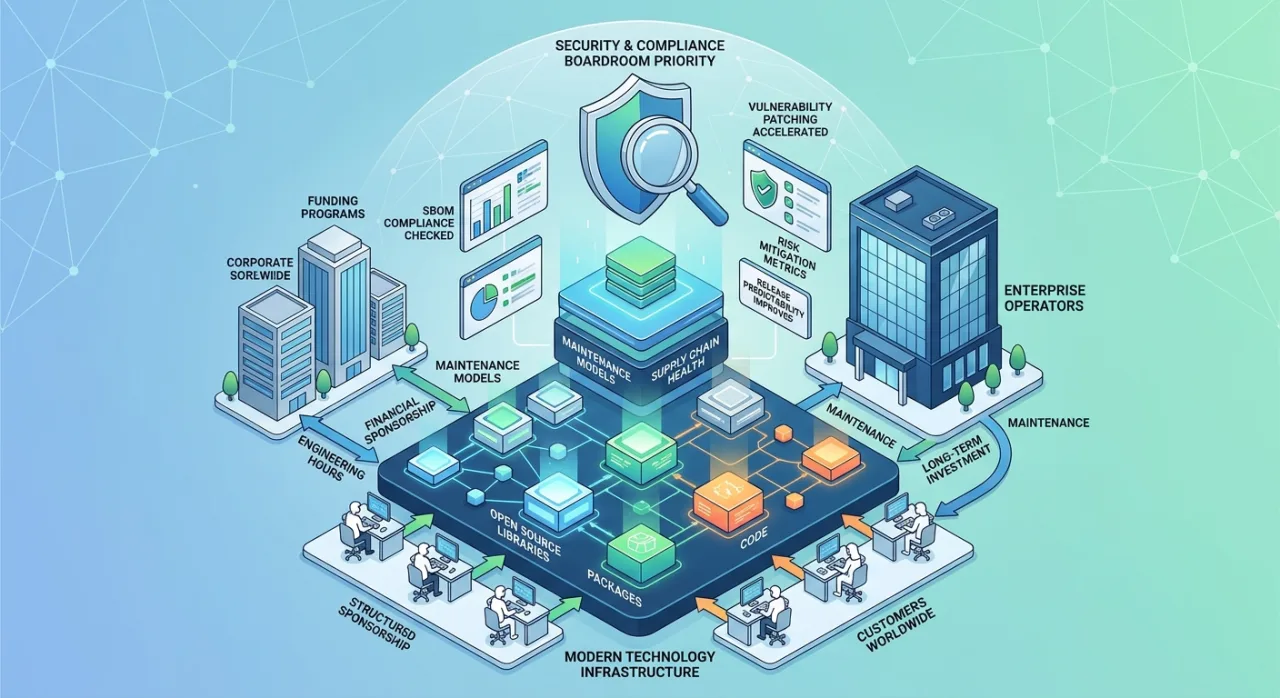
The broader tech landscape now demands a balance between rapid capability delivery and operational restraint. Products built on open-source maintenance models regularly launch with comprehensive safety evaluations, usage tracking, and rollback plans to satisfy enterprise buyers and regulatory standards.
Strategic Benefits of Open Source Upkeep
| Focus Area | Key Operational Impact |
| Regulatory Compliance | Meets strict Software Bill of Materials (SBOM) requirements and tracks transitive dependencies. |
| Risk Mitigation | Protects proprietary applications from upstream vulnerabilities and legal liabilities. |
| Enterprise Readiness | Fulfills core enterprise procurement and audit criteria right out of the box. |
Investing in open-source upkeep is no longer an act of passive corporate philanthropy; it is a critical defensive strategy designed to protect proprietary software assets and ensure compliance.
What Happens Next
The future of open-source maintenance models depends on the practical execution of reliability, transparent pricing, and structured support. Buyers evaluating these frameworks today are operators with tight budgets and strict auditing requirements. On the evidence of ongoing pilot programs, the underlying model has earned its place in mainstream enterprise architecture.
Progress will not stem from a single announcement or product launch. Instead, look for steady accumulation across key indicators:
-
Independent validations and peer-reviewed confirmations
-
Transparent, honest reporting of operational failures
-
Continuous, incremental improvements in security and maintenance metrics
Practical Steps for Organizations
-
Focus on Verified Facts: Base software supply chain decisions on concrete maintenance data rather than promotional claims.
-
Embrace Incremental Change: Prefer reversible, modular steps while evidence and standards continue to mature.
-
Tailor Strategy to Context: Adapt general guidelines to fit your organization’s specific resource capabilities, regulatory requirements, and technical stack.
-
Maintain Operational Agility: As data evolves, adjust maintenance and dependency strategies to match current evidence rather than outdated assumptions.