

In today’s digital enterprise landscape, web platforms have evolved from simple marketing brochures into mission-critical business hubs that directly drive revenue, operational efficiency, and customer engagement. As organizations scale, the architectural foundation of their web infrastructure becomes the single most influential determinant of technical stability and market performance. Engineering teams and executive stakeholders must align on technical standards that bridge clean application design, responsive frontend experiences, and rigorous infrastructure security.
Overcoming Technical Debt and Monolithic Constraints
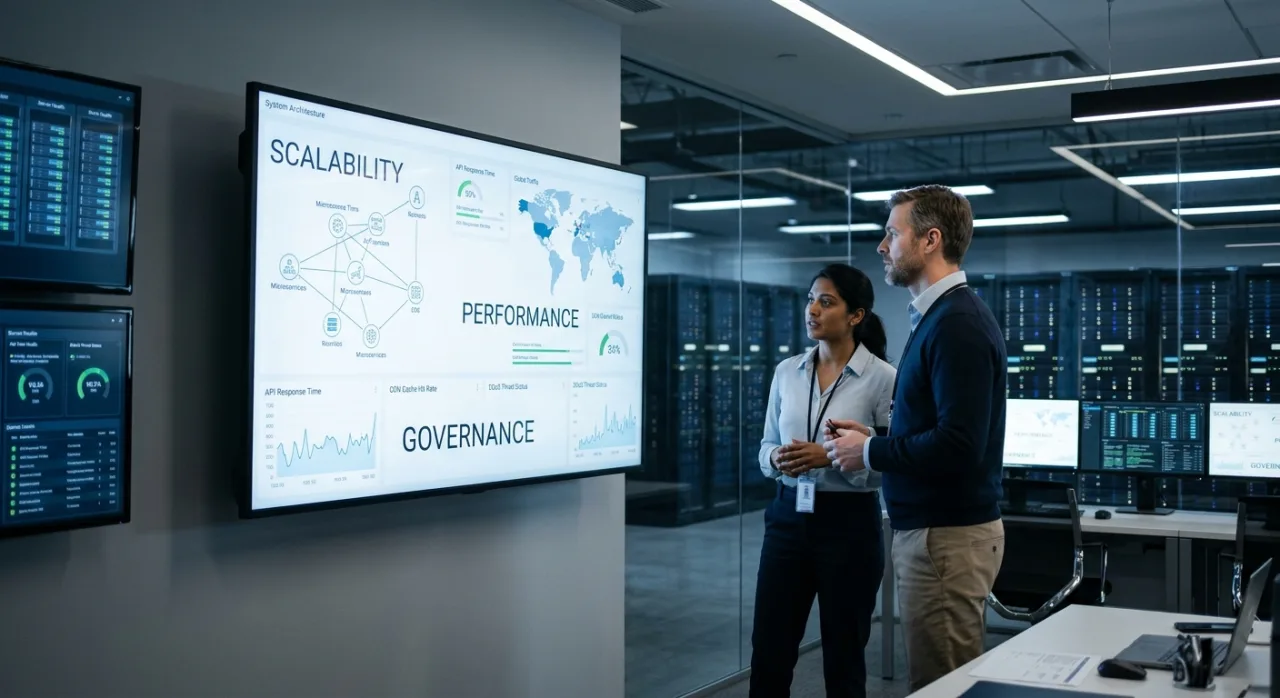
A primary challenge confronting growing enterprises is technical debt accumulated through hasty development cycles, unvetted third-party integrations, and monolithic architectures. When corporate web properties experience sudden traffic surges or undergo rapid functional additions, poorly optimized legacy architectures fail under load.
Key operational risks associated with legacy architectures include:
-
Database Bottlenecks: Unoptimized queries stall transaction throughput during peak traffic.
-
Bloated Asset Pipelines: Heavy scripts and uncompressed assets delay initial page renders.
-
Unoptimized Server Response Times: High Time to First Byte (TTFB) weakens search engine visibility and damages user perception.
Addressing these systemic challenges requires adopting modular design patterns, headless or decoupled content delivery networks, and strict code hygiene across the entire development stack.
Embedded Performance Engineering & Core Web Vitals
Performance engineering must be embedded directly into every phase of the web development lifecycle rather than treated as an afterthought. Core Web Vitals establish clear engineering benchmarks for frontend stability and user experience:
| Core Web Vital Metric | Benchmark Focus | Optimization Strategy |
| Largest Contentful Paint (LCP) | Loading Performance | Asset preloading, critical CSS extraction, efficient image compression workflows. |
| Interaction to Next Paint (INP) | Page Interactivity | Granular code splitting, main-thread task minimization, optimized event listeners. |
| Cumulative Layout Shift (CLS) | Visual Stability | Explicit image/video dimensions, dynamic content reservation, robust edge-caching mechanisms. |
When corporate organizations partner with an experienced web design company in Canada, they gain access to specialized engineering frameworks that balance aesthetic visual design with enterprise-grade backend infrastructure.
Security, Compliance, and Digital Accessibility
Security and compliance form another fundamental pillar of modern corporate digital infrastructure. Organizations operating across North America and international markets face stringent regulatory mandates governing data privacy, user consent, and digital accessibility.
                  ┌──────────────────────────────────────────┐
                  │      Enterprise Security & Compliance    │
                  └────────────────────┬─────────────────────┘
                                       │
         ┌─────────────────────────────┼─────────────────────────────┐
         ▼                             ▼                             ▼
┌──────────────────┐         ┌──────────────────┐         ┌──────────────────┐
│  Web Application │         │ Automated Vulner- │         │     WCAG 2.1     │
│ Firewall & Encr. │         │  ability Scans   │         │ AA Accessibility │
└──────────────────┘         └──────────────────┘         └──────────────────┘
A comprehensive security posture relies on four core engineering controls:
-
Proactive Web Application Firewalls (WAF): Block malicious traffic and automated bot networks before they reach core servers.
-
Encrypted Protocols & Zero-Trust Access: Secure end-to-end data in transit via modern TLS and strict access policies.
-
Automated Vulnerability Scanning: Continuously monitor code dependencies to catch software flaws before deployment.
-
WCAG 2.1 AA Compliance: Ensure digital properties deliver equitable, accessible experiences to all users while eliminating regulatory liability.
Sustainable Content Governance and Operational Workflows
Enterprise web platforms frequently support distributed teams of marketers, content creators, and product specialists who require intuitive editorial tooling without risking site stability. Decoupled content management systems (CMS) and role-based publishing controls empower marketing teams to publish dynamic collateral rapidly while preserving strict engineering guardrails.
Automated staging environments and continuous integration/continuous deployment (CI/CD) pipelines safeguard production stability by verifying code quality, running regression tests, and validating security configurations automatically prior to release.
API-First Integrations and System Telemetry
Modern enterprise architectures prioritize API-first integration patterns to seamlessly connect corporate websites with backend business tools:
-
Enterprise Resource Planning (ERP)
-
Customer Relationship Management (CRM)
-
Marketing Automation Platforms
Maintaining clean data synchronization across these endpoints eliminates data fragmentation and manual administrative friction. Robust error logging and telemetry monitoring ensure that unexpected system failures or third-party service interruptions surface immediately for fast mitigation, maintaining operational continuity across all commercial touchpoints.
Intuitive UI/UX and Empathetic Conversion Pathways
In addition to backend engineering resilience, user interface design must prioritize intuitive information architectures and empathetic conversion pathways. Complex corporate service offerings require visual hierarchies that guide prospective B2B clients naturally toward high-intent conversion actions without unnecessary cognitive friction.
Clear micro-interactions, accessible typography choices, and streamlined form structures significantly enhance user satisfaction and elevate brand credibility during high-stakes commercial evaluations.
Conclusion: Securing Long-Term Commercial Advantage
Sustaining a competitive advantage in the modern digital marketplace requires treating enterprise websites as living digital assets that demand intentional maintenance, iterative performance optimization, and data-informed development. By committing to scalable infrastructure architecture, user-centric interface design, and proactive security governance, commercial enterprises position themselves for sustainable growth, resilient brand visibility, and measurable return on investment across an increasingly complex digital landscape.
Investing in disciplined engineering workflows and scalable web architecture ensures that corporate platforms remain adaptable as technological requirements and user expectations evolve. Establishing a solid technical foundation today empowers organizations to embrace emerging innovations, maintain regulatory compliance, and consistently deliver superior digital experiences that support enduring commercial achievement.