

Counter-Strike boasts one of the most dedicated communities in gaming, with millions of players following the franchise from its earliest days. Moving from Counter-Strike: Global Offensive to CS2 introduced mechanical overhauls alongside a major shift in the skin economy. Understanding these shifts, updated trading strategies, and key skin assets is essential for navigating today’s marketplace.
How CS2 Skin Trading Has Changed Since CS:GO
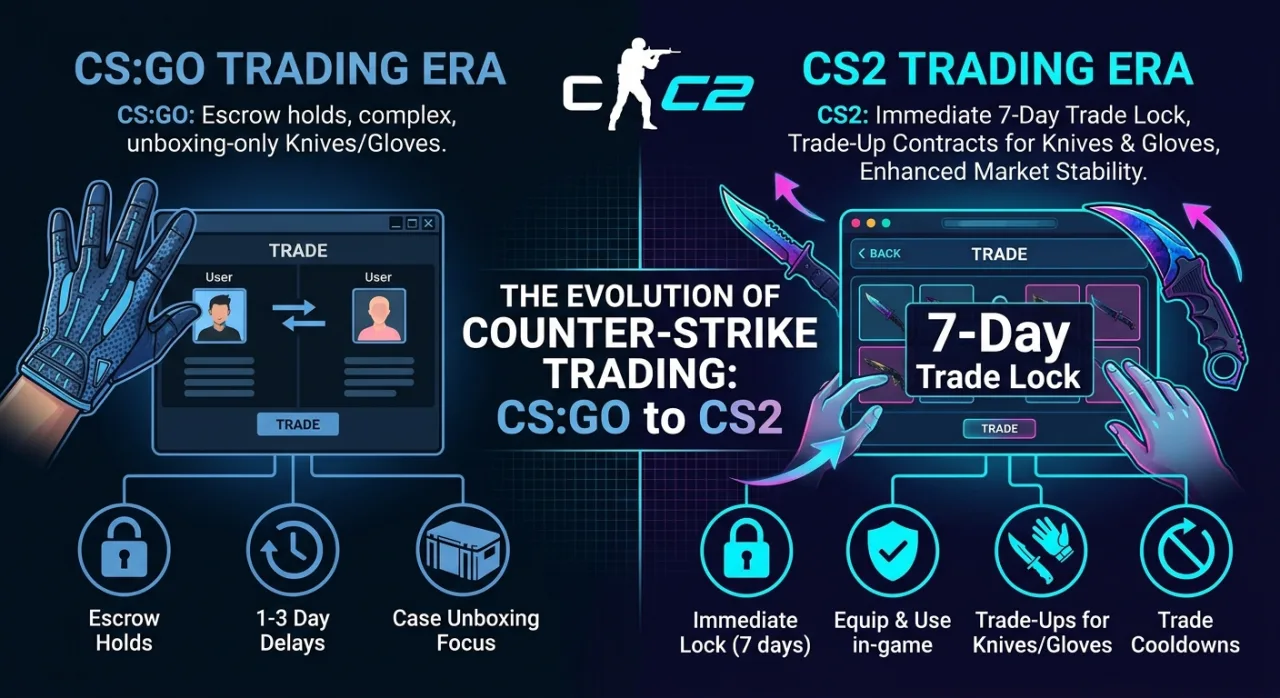
Transitioning from CS:GO to CS2 redefined inventory values and marketplace behavior across three main areas.
1. New Trade Protection Rules
In CS:GO, trading relied on escrow holds that delayed item delivery for several days. Today, CS2 items arrive in your inventory immediately upon completing a trade, but they remain subject to a strict seven-day trade lock.
-
In-Game Use: During this seven-day window, you can equip and use the skin in matches.
-
Restrictions: You cannot trade the skin, list it on market platforms, or apply stickers until the lock expires.
-
Reversal Penalties: The sender can reverse the transaction during this period, but doing so triggers an immediate 30-day trade and market cooldown on their account.
-
Market Impact: This rule eliminated rapid, same-day skin flipping, prompting third-party marketplaces to hold payouts until the lock expires.
2. Knife and Glove Trade-Ups
For over a decade, opening weapon cases was the primary way to acquire a rare knife or pair of gloves. That dynamic changed when Valve introduced a system allowing players to trade up five Covert-tier weapons from the same collection directly into a knife or gloves.
[5 Covert Weapons (Same Collection)] ───► [1 Knife or Pair of Gloves]
-
Market Reaction: The marketplace experienced an immediate drop in aggregate value as knife and glove supply expanded.
-
Price Shifts: Common knife and glove prices declined, while high-tier Covert (red) skins eligible for these trade-up contracts spiked in value.
-
StatTrak Guarantee: Because StatTrak gloves do not exist, qualifying StatTrak trade-up contracts guarantee a StatTrak knife output.
3. Shifts in Long-Term Skin Valuations
The historical assumption that weapon skin supply strictly decreases over time no longer applies across all item tiers. Because knives can now be crafted, total populations can grow over time.
| Skin Category | Market Impact | Key Valuation Drivers |
| Common Knives & Gloves | Price Compression | Increased overall supply from trade-up contracts. |
| Rare Patterns & Floats | High Value Retention | Trade-ups cannot target specific pattern indices, Doppler phases, or low floats. |
| Discontinued Covert Skins | Price Appreciation | Consumed continuously as trade-up inputs, increasing scarcity. |
Best CS2 Skin Trading Strategies
Profitable trading requires looking beyond personal aesthetic preferences to evaluate baseline pricing, community demand, and resale liquidity.
-
Acquire Assets Before Peak Hype: Skin valuations follow community events such as new case releases, Major tournaments, or balance updates. Acquire targeted items early and liquidate during peak activity. Once an item dominates community discussions, the most profitable buying window has closed.
-
Leverage Price & Wear Analytics: Use historical price charts to identify genuine market trends versus temporary artificial spikes. Float checkers and high-resolution inspection tools help locate clean wear patterns that command overpay. Aggregators help compare prices across multiple storefronts to secure competitive rates.
-
Manage Around the 7-Day Lock: Because new acquisitions remain locked for a full week, intraday flipping is no longer viable. Limit purchases to items you are comfortable holding for at least seven days, and keep a portion of your inventory unlocked to capitalize on sudden market opportunities.
High-Demand CS2 Skins to Consider
Certain skins consistently maintain strong trading interest due to their visual appeal, historical significance, or supply dynamics.
SSG 08 | Big Iron
-
Origin: Shadow Case (September 2015)
-
Design: Hydrographic yellow and orange paint with a distressed, industrial finish.
-
Market Dynamics: Originating from a discontinued case, this Restricted-tier sniper rifle remains an accessible entry point with steady long-term scarcity appeal.
Five-SeveN | Angry Mob
-
Origin: Prisma Case (March 2019)
-
Design: Modern street-art aesthetic with vibrant orange and blue tones, finished with custom engraving details.
-
Market Dynamics: A Covert-tier pistol finish that offers high visual impact at an accessible price point for budget-conscious inventories.
MAC-10 | Neon Rider
-
Origin: Chroma 2 Case (April 2015)
-
Design: 1980s retro-futuristic styling featuring hot pink, cyan, and neon blue highlights.
-
Market Dynamics: A classic decade-old Covert SMG from a legacy collection, offering strong liquid demand compared to standard weapon finishes.